


The open data platforms transforming health procurement
A growing number of countries are using open data platforms to make healthcare procurement more transparent. Yet real accountability depends on active civil society monitoring and whether procurement decisions translate into patients receiving the medicines they need.
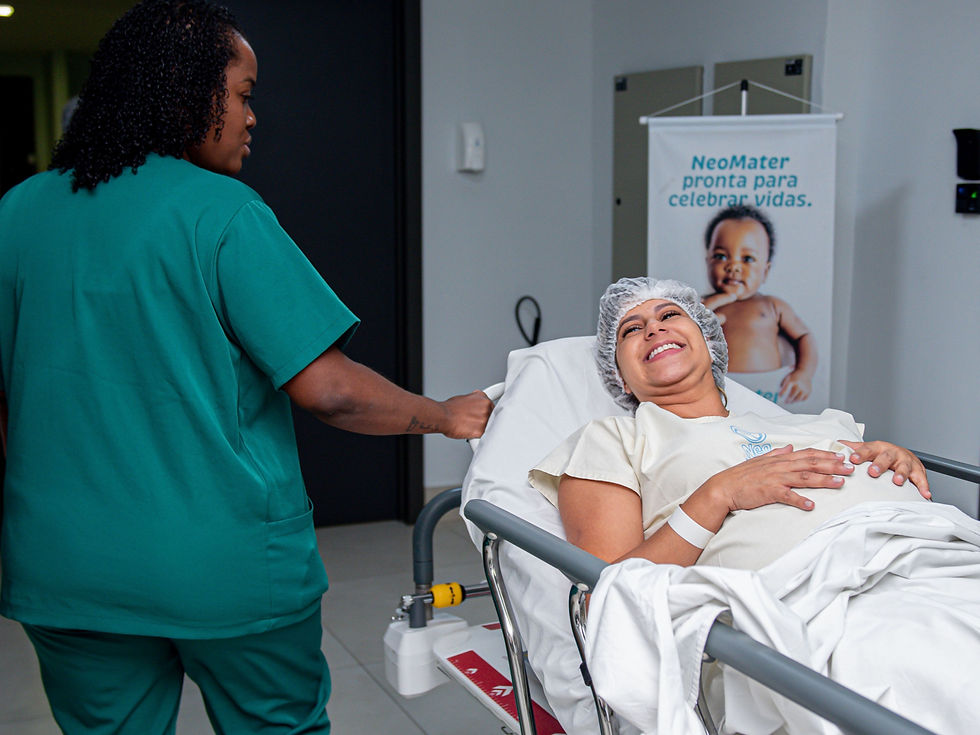
Fragmented healthcare procurement across Brazil’s 27 states affects access to essential medicines for millions of people. Photo: Wellington Tavares
As one of the world’s largest government-run public healthcare systems and the sole provider of health services for more than 164 million people, Brazil’s Unified Healthcare System (SUS) faces an enormous procurement task to uphold its promise of free access to essential medicines.
The sheer scale of the undertaking—more than R$382.2 billion (US$75 billion) was allocated to health services during 2019–2022—has resulted in fragmented healthcare procurement across the country’s 27 states and more than 5,000 municipalities.
Inconsistent documentation and large price variations are common, and oversight is difficult as no single person or organisation is accountable for the consequences of poor procurement decisions. As a result, an estimated 15 million people in Brazil are unable to obtain essential medicines.
Greater visibility in medicine purchasing
The introduction of Medicamentos Transparentes, or ‘Transparent Medicines’, in April 2025 aims to bring greater visibility to Brazil’s sprawling system by centralising procurement data and making medicine purchasing patterns easier to track, compare, and scrutinise.
The open-access platform aggregates medicine purchases made across the country, with the aid of AI, helping public officials compare prices and reach fairer procurement decisions—and, crucially, making procurement data publicly available for greater transparency and accountability.
“A tool that helps governments procure more efficiently therefore means expanding healthcare provision for the millions of Brazilians who depend on the universal health system.”
Juliana Sakai, executive director at Transparência Brasil, which manages the platform, says the public availability of national healthcare procurement data will contribute to cost savings, improved planning and management, and “probity”, ultimately leading to better health outcomes for people depending on care.
“Public health is an underfunded area, and spending on medicines has been rising in Brazil year after year. A tool that helps governments procure more efficiently therefore means expanding healthcare provision for the millions of Brazilians who depend on the universal health system,” she says.
In a space often beset by administrative overwhelm, opaque decision-making, and corruption scandals—despite, or perhaps because of, healthcare accounting for the largest share of procurement spending in many countries, reaching an average of 32% in OECD nations—Brazil’s efforts are part of a broader, open data-led global movement championing improved accountability that centres procurement decisions on better patient outcomes.
Open contracting boosts transparency
The key problem Medicamentos Transparentes seeks to address is “the poor quality of data on public drug procurement,” explains Sakai, citing a survey by Transparência Brasil that found only 7% of Brazil’s R$36 billion (US$7.16 billion) spent on medicine purchases recorded during 2021–2024 contained enough information for price comparison.
“In many records, it was impossible to determine even the concentration or pharmaceutical form of the medicine purchased—whether, for example, a dipyrone tablet contained 500 mg or 1 g, or whether it was a liquid or a pill,” she says. “Without reliable data, public servants cannot research reference prices or compare what different entities pay for the same medicine.”
Such challenges point to the growing relevance of open contracting, which seeks to make procurement more transparent through the publication of open, accessible, and timely information on public contracting.

Procurement is undergoing a shift from paper-based approaches to digital approaches. Photo: Manuel Camacho-Navarro
Dr Gavin Hayman, executive director at Open Contacting Partnership, an independent non-profit working in more than 50 countries, says procurement is undergoing “a real shift from paper-based approaches to digital approaches”, explaining that open contracting can “intelligently” publish information that aids transparent decision making.
“It's about intentionally thinking through the information everyone needs to do their jobs properly, and designing a regime that is fit for purpose, while minimising the bureaucracy and bookkeeping aspects of it,” he explains. “We say ‘open by design’ rather than everything having to be published.”
According to Hayman, procurement systems are often poorly integrated, forcing government workers to duplicate information across separate purchasing and transparency platforms. The result is inconsistent, low-quality data that is rarely used effectively.
“The procurement people are often regarded as a mixture of chore and bureaucracy and 'computer-says-no’ kinds of people, and the information that gets entered into these platforms is really scattered. The wrong figures are put in but no one cares—no one uses the data,” he says.
“This is not about tech solutions; it's about rethinking public services in a smart way for the digital age.”
Open contracting, Hayman explains, aims to reduce this administrative burden by designing interoperable systems that can share information automatically, improving transparency without adding unnecessary bureaucracy.
“For most people, this should mean more available and abundant medicines at a lower price when they need them through changing how the whole procurement chain works. That might mean chopping out the middlemen, swapping expensive brand names for generics, or paying attention to dosage. For example, two 5 mg pills might be a lot cheaper than one 10 mg pill,” he says.
Importantly, Hayman explains, technology makes the shift to open contracting in healthcare procurement possible—but it is not the end goal. “This is not about tech solutions; it's about rethinking public services in a smart way for the digital age.”
Transparent procurement in Ukraine
Open contracting approaches to healthcare procurement are being tested or scaled in countries including Paraguay, Colombia, Moldova, Chile, and Mexico, while Transparency International’s Open Contracting for Health initiative has supported reforms across Kenya, Uganda, Zambia, Nepal, and South Africa. “Open contracting is being used around the world,” says Tom Wright, applied data and technology lead at Transparency International UK.
The Open Contracting Data Standard supports organisations and governments to increase contracting transparency. “It can be overwhelming to go straight from no digitalisation to massive digitalisation; so the idea is to ensure that the data appetite is there to digitalise and then build up based on what would be useful for the community in terms of how much data is being released,” Wright explains. “When you're procuring billions of pounds a year on health products, there’s going to be a lot of data, so digitalisation is a gradual process.”
One of the biggest success stories in open contracting is Ukraine’s open-source e-procurement system, Prozorro.
He says one of the “biggest success stories” in open contracting is Ukraine’s open-source e-procurement system, Prozorro—or ‘Transparently’—which uses the Open Contracting Data Standard. Ukrainians’ long-standing frustration with the country’s closed and corrupt procurement system helped drive reform efforts after the 2014 Revolution of Dignity. Prozorro was launched in 2014 by a group of anti-corruption social activists, making government information about public contracts easily accessible online for anyone to see, access, and use.
By December 2020, procurement savings amounted to UAH 269.52 billion (US$6 billion). Prozorro has maintained remarkable resilience and efficiency during the war with Russia and the Covid-19 pandemic, with 80% of all public procurement funds spent through Prozorro by 2024.
Ukraine’s vocal patient organisations are central to the successes of Prozorro, which extend beyond cost savings to increased competition and more efficient contracting processes. This helps buyers make better and fairer procurement decisions that result in patients receiving the medicines they need.
Pandemic procurement risks
In many countries, it was the Covid-19 pandemic that thrust healthcare procurement, and its susceptibility to corruption and accountability gaps, into the spotlight. Reports of inflated prices, opaque contracts, and emergency procurement abuses became widespread. Crucially, Wright notes, high-income countries like the UK were just as likely to experience procurement failures as low- and middle-income countries (LMICs).
For Indonesia, which has long been vulnerable to corruption in public procurement, emergency pandemic regulations meant that contracts for medicines and other supplies could be awarded without a competitive tender process.
“Suppliers could potentially be selected based on personal connections, informal relationships, or even kickbacks or other forms of conflict of interest, rather than objective criteria such as capacity, track records, quality, or price competitiveness. Our signal immediately went up,” says Almas Sjafrina, acting coordinator at Indonesia Corruption Watch, noting that during 2016–24 there were more than 2,000 public procurement corruption cases in the country across all sectors, with estimated state losses reaching more than IDR95 trillion (US$5.289 billion).

Indonesia Corruption Watch set up a dashboard to monitor healthcare procurement during the pandemic, which found purchased items did not always match operational needs. Photo: Kevin Yung
Using the country’s digital public procurement monitoring tool, Open Tender, where data related to competitive tenders is aggregated across all of Indonesia’s national and local government agencies, Indonesia Corruption Watch set up a separate dashboard to monitor healthcare procurement during the pandemic.
“We identified contracts awarded to companies with limited or no previous experience supplying medical equipment,” Sjafrina says. “We also identified other major findings, such as procurement planning didn't accurately capture the actual need of hospitals and labs, creating risk that purchased items might not match operational needs—that's why many labs and hospitals returned testing equipment.”
Civil society monitoring is key
Indonesia’s experience, and that of Ukraine, Brazil, and other countries, shows that it is not enough to simply collect and publish procurement data on open-source platforms—the information must be actively monitored by civil society.
“The key thing about open contracting is it doesn't really mean anything if there's no one looking at it, so it needs civil society monitoring or watchdogs to look at it at the same time,” Wright says.
“Law enforcement alone, without public participation in monitoring procurement and safeguarding regulation, risks becoming merely a firefighting exercise. We have to promote the importance of public participation in monitoring procurement.”
A detailed process for identifying irregularities in procurement, developed by Indonesia Corruption Watch, helps civil society and other members of the Indonesian public report suspected violations to local authorities. “More transparent procurement doesn't guarantee more accountable procurement,” Sjafrina says. “Law enforcement alone, without public participation in monitoring procurement and safeguarding regulation, risks becoming merely a firefighting exercise. We have to promote the importance of public participation in monitoring procurement.”
Likewise, in Ukraine, an army of citizen monitors under the umbrella Dozorro, or ‘Watchdog’, analyse contracting data on Prozorro, flagging high-risk deals and irregularities and reporting them to government authorities.
For Brazil, open procurement reforms are being strengthened through active scrutiny by civil society organisations. Watchdog groups such as Transparência Brasil analyse large volumes of procurement records on Medicamentos Transparentes and support oversight of spending decisions.

Watchdogs link analyse large volumes of procurement records to uncover whether purchases translate into real availability for patients. Photo: Kaboom Pics
Looking ahead, Sakai, of Transparência Brasil, says there is growing need to move beyond monitoring procurement transactions alone and connect purchasing data with what happens on the ground. “We want to link procurement information with medicine stock data so we can track whether a given purchase actually results in delivery, or conversely, whether there are drug shortages that should not be occurring given that a contract for that medicine already exists,” she explains.
In this way, the next frontier of accountability is not only transparency in how governments buy medicines, but honing in on whether those purchases translate into real availability for patients—and closing the loop between procurement decisions and access to essential medicines.


