


Better AI for women’s health hinges on more data
AI has the potential to advance women's healthcare, but only if it is built on higher quality data. Innovators are showing that closing longstanding research gaps and ensuring women's experiences are prioritised are the first steps towards more equitable care.

Underfunding and a lack of available data in women's health research means that a diagnosis does not always lead to adequate treatment plans or professional support. Photo: Polina Zimmerman
At first, receiving a diagnosis of endometriosis—a chronic and often debilitating gynaecological condition—felt like crossing an important threshold for Louise Dreisig. She expected the diagnosis to lead to the appropriate investigations, a coordinated treatment plan, and professional support. Instead, her battles were only beginning.
As a poorly understood and often overlooked condition affecting around 190 million women of reproductive age worldwide, endometriosis epitomises the longstanding inequality in women’s health. Decades of underinvestment in research has left long-standing gaps in knowledge, diagnosis, and care, contributing to years of unnecessary pain and disability for many women. Common symptoms of endometriosis include severe pain during menstruation, chronic pelvic pain, and infertility.
Dreisig, now 48, from Copenhagen, Denmark, was diagnosed in her late 20s. She describes being bounced between hospital departments that failed to communicate, even as her condition deteriorated. Doctors appeared passive, she says, and she felt talked down to and dismissed. “I was often left to fend for myself and had to insist on getting help, all the while in severe pain,” she recalls.
The absence of clear guidance left her feeling completely lost. Alongside the physical symptoms came what she describes as “mental chaos”, including questions about her future, her fertility, and whether the disease would affect every part of her life. “I was left alone with very significant existential questions,” she says, as well as “a deep sense of shame and exclusion from society”.
Dreisig’s experience is all too common and helps explain why AI is generating such interest in women’s health. AI has the potential to transform medicine by interrogating and integrating vast amounts of clinical, imaging, genomic, and patient-generated data, uncovering previously unrecognised patterns that could lead to earlier diagnosis, more personalised care, and even new biological insights. But its success depends on the availability and quality of those data—and this is the fundamental challenge to the use of AI in women’s health.
Many conditions largely affecting women, including recurrent urinary tract infections and cardiovascular disease, as well as endometriosis, remain under-researched and hence lack the essential data needed. To further complicate matters, clinical information is often fragmented across specialties, diagnoses are delayed, symptoms poorly characterised, and women’s lived experiences rarely captured alongside biological and clinical data. As a result, the rich, integrated datasets on which AI depends often do not exist.
AI-aided support across the diagnostic pathway
The EU-funded FEMaLe (Finding Endometriosis using Machine Learning) project is helping to address this deficit. Using AI to analyse vast amounts of patient information to identify subtle patterns that often elude traditional diagnostics, it set out to help doctors identify endometriosis earlier and with greater precision.
The project’s findings helped raise the profile of women’s health inequality in Denmark, contributing to the case for a new National Centre for Research in Women’s Health. Its scientific and technological advances are also being carried forward through two major follow-on EU initiatives— EUmetriosis and READI—while digital tools developed through the programme, including AI-assisted decision-support systems (SurgAR) and the Lucy symptom-tracking app, continue to evolve beyond the life of the project, which ended in 2025.
Progress depends not only on developing better algorithms but also on generating high-quality clinical, imaging, and patient-reported data.
Ulrik Bak Kirk, chief consultant and PhD faculty fellow in the Department of Public Health at Aarhus University, Denmark, who coordinated the project scientifically, believes FEMaLe highlights a broader lesson for women’s health research. AI is not a shortcut to better diagnosis, he says, but one component of a much wider diagnostic pathway. Progress depends not only on developing better algorithms but also on generating high-quality clinical, imaging, and patient-reported data, understanding how diseases such as endometriosis vary between individuals, and integrating those insights into routine care.
He says FEMaLe pioneered AI-supported tools across the diagnostic pathway, including decision support for radiology and surgery, where machine learning helps clinicians identify and distinguish endometriosis lesions (when tissue similar to the lining of the uterus grows elsewhere in the body) while generating the structured data needed to refine future diagnosis and treatment.

AI tools can aid in identifying endometrial lesions outside of the pelvic area. Red arrows indicate segmental thickening of multiple intestinal lesions. Photo: Yin S, Lin Q, Xu F, Xu J and Zhang Y (2020)
Endometriosis is emblematic of wider inequalities in women’s health, Kirk says, adding that symptoms are often normalised, unacknowledged, or attributed to other conditions. “I hate that it’s stated as something benign,” he says. Although rarely life-threatening, “it reduces your quality of life. It affects your opportunity to get a proper education, to have a job…your everyday life.”
Conditions that primarily damage quality of life have historically attracted less research attention than diseases that threaten life. “You’re not going to die from it,” Kirk says of endometriosis, “but it will really cripple your life.”
Dreisig describes FEMaLe, for which she was an external advisor, as “an enormous gift” because it placed both the disease and those living with it firmly on the research agenda. She believes that the project exposed both the scale of the problem and how much work remains before women receive adequate physical and psychological care for endometriosis.
“If we are to move away from the shame of suffering from a gynaecological condition, it requires people who do not have endometriosis themselves to also take up the fight on our behalf,” she notes.
Amplifying unheard voices in women’s healthcare
For Saad Hussain, co-founder of Awaaz-e-Sehat (‘Voice of Health’ in Urdu), the research-led Pakistani maternal health platform, building AI for women’s health has been as much a lesson in humility as in technology. Designed to improve maternal healthcare in a country where more than 150 women die for every 100,000 live births, the AI-enabled platform, which launched in 2023, helps women generate and own their health records, access culturally relevant health information, and arrive at consultations better prepared.
Crucially, Awaaz-e-Sehat aims to place women, rather than technology, at the centre of care. After more than two decades in the technology startup sector, Hussain joined the project wanting to use AI for social good rather than purely commercial gain. What he did not anticipate was how much he would have to rethink his own assumptions.
“The most important thing was being flexible enough to understand that I still needed to learn. If I had built this product by myself, it would have been a disaster,” Hussain acknowledges, explaining that it succeeded because Dr Maryam Mustafa, an AI researcher at Lahore University of Management Sciences, led the work in close partnership with obstetrician and gynaecologist Professor Fozia Umber Qureshi, whose clinical expertise ensured the technology addressed patient needs.

AI cannot solve inequalities in women’s health if it is designed without women from research stages to implementation. Photo: Karola G
Hussain’s reflection illustrates a wider lesson. AI cannot solve inequalities in women’s health if it is designed without women. Representation is not simply about including women in datasets, he argues, but about ensuring that women help define the problems technology is built to solve.
Overcoming the data deficit
Although working in very different healthcare settings, Awaaz-e-Sehat reached much the same conclusion as FEMaLe: before AI can improve women’s health, it must first overcome a more fundamental obstacle—the data simply is not there.
Realising that Pakistan’s public healthcare system lacked digitised maternal health data, the first challenge was to find a way to generate reliable, usable clinical information. The Awaaz-e-Sehat app was designed to capture women’s symptoms, medical history, pregnancy details, and investigation results in a structured digital format. “[The information] was sitting in paper files,” Hussain explains, adding that healthcare records remained fragmented across hospitals and provinces, with women often carrying paper notes from one appointment to the next. “Records were easily lost, tests repeated unnecessarily, and clinicians frequently lacked access to previous information.”
The first version of the app was primarily clinician-facing and aimed to facilitate consultations and identify serious complications, such as preeclampsia, at an earlier stage. The technology enabled spoken consultations in Urdu to be incorporated into structured electronic medical records, while also creating a digital record, and through the algorithm, highlighting potential red flags and suggested follow-up questions based on established clinical guidelines. The system supported the creation of over 500 electronic medical records and flagged over 300 potential clinical risks during a seven-month deployment in a non-profit hospital.
“If we empower her to generate her own data and allow her to own that data digitally, the system has a much better chance of working.”
However, despite the benefits, overstretched clinicians struggled to use the app effectively. Accordingly, the team switched the emphasis from the clinician to the patient. “We realised that the only way this was going to work was for it to become more patient-focused. The one common element across the whole journey is the woman herself,” Hussain says, stressing that, “if we empower her to generate her own data and allow her to own that data digitally, the system has a much better chance of working.”
AI only works if it fits women’s lives
The latest version of the Awaaz-e-Sehat app enables women to record symptoms and other observations via WhatsApp in Urdu or English before their clinical appointment. They can also upload medical history and laboratory results, allowing clinicians to prepare before the consultation and make better use of limited appointment time. Designed around the realities of women’s lives and local healthcare delivery, these adaptations make the technology more practical and accessible, encouraging sustained use.
Women can also share records between providers using QR codes or web links, reducing repeat tests, retelling of their illness experience, and more efficient sharing of test results. “Laboratory results can sometimes be reviewed remotely, avoiding unnecessary journeys that, in many low-income households, require a husband or family member to miss a day’s work,” Hussain explains.
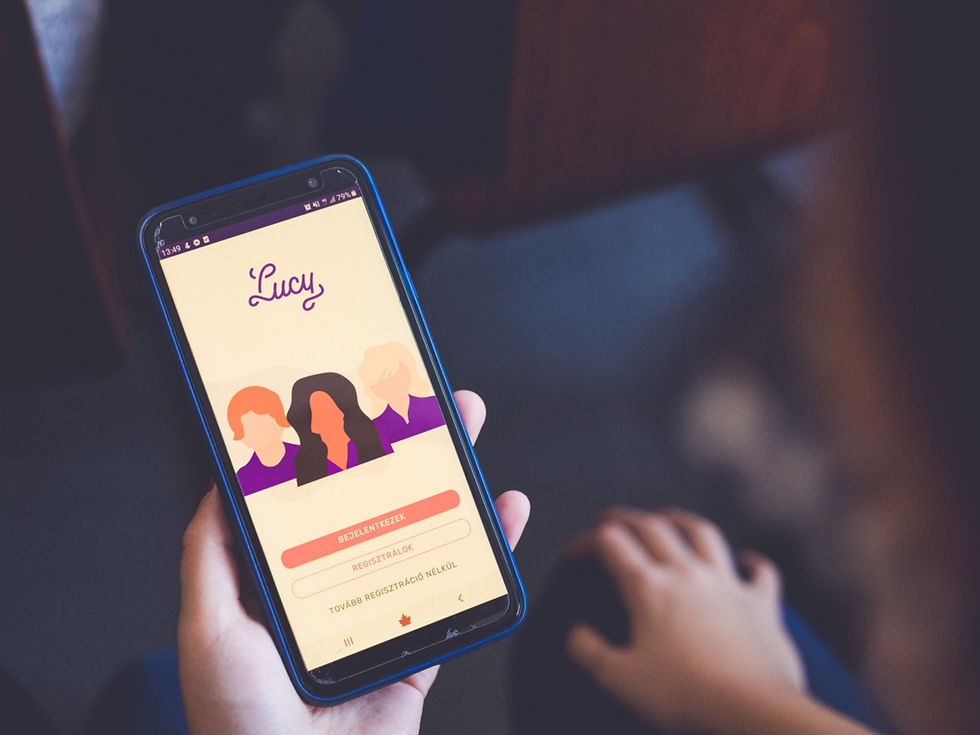
The Lucy symptom-tracking app uses an algorithm to recognise health conditions like endometriosis and PMOS. Photo: Condingo
Crucially, the maternal health information provided via the app is also tailored to the Pakistani context rather than simply reproducing advice generated from Western healthcare settings. “It shouldn’t simply tell a woman to go for a run just because that’s common advice elsewhere in the world,” Hussain says. Likewise, advice is often tailored to be more relatable in the local setting. “Foetal growth may be described using familiar local fruits and vegetables,” he adds.
For Hussain, these decisions illustrate a wider principle for AI in women’s health. Algorithms trained predominantly on data from high-income countries cannot simply be transplanted into different healthcare systems and populations. “Whether AI reduces inequality depends on how you architect the solution and who you are building it for,” he says. “If you are building for a low- or middle-income environment but using data from a high-income country, then you are already on very loose footing. We are looking at the data available in Pakistan, generating the data we need, learning from it, and putting guardrails around the system to accommodate local needs.”
When AI is used to generate new evidence rather than simply analyse existing datasets, it has the potential not only to improve healthcare but also to narrow some of the inequalities that have long characterised women’s health.
His conclusion echoes a growing consensus emerging across women’s health research more widely. AI alone cannot compensate for decades of underinvestment, missing data, or neglected conditions. But when women themselves actively help shape its design, when technologies reflect local realities rather than imported assumptions, and when AI is used to generate new evidence rather than simply analyse existing datasets, it has the potential not only to improve healthcare but also to narrow some of the inequalities that have long characterised women’s health.
Dreisig, the Danish patient, says that is ultimately what AI should achieve: not simply faster algorithms, but recognition that women’s experiences are themselves a source of knowledge. FEMaLe, she says, “put the disease, and, not least, all those affected by it, on the agenda”.
More women are now coming forward to tell their stories, something Dreisig finds “deeply moving and incredibly powerful”. Yet, she says, this is only the beginning. “There are still so many doors that have yet to be opened, and even more questions that remain unanswered.”


