


AI alone cannot fix Africa’s health service delivery gaps
AI offers hope for Africa’s longstanding health service delivery challenges. But whether it makes good on its promise depends more on the strength of the systems built around it than the technology itself.

Health workers often choose tools that do not depend on internet connectivity over more advanced systems. Photo: Gustavo Fring
AI is being promoted as a way to stretch scarce health workers, predict supply shortages, and improve care. But emerging evidence from Africa suggests that its impact depends less on the sophistication of the algorithm than on the strength of the health system around it.
In some Tanzanian clinics, vaccination may take place in the open under a tree or in a room without a reliable power socket. That was the working environment Henry Mwanyika encountered while helping Tanzania’s government and PATH develop an electronic immunisation registry. Rather than start with the most advanced technology available, the team chose portable tablets and software that could continue working when internet connectivity failed.
“The solution itself has to be able to work without internet connectivity,” says Mwanyika, then PATH’s regional director for digital health in Africa. “So it has to be offline.”
Indeed, AI is entering health systems where the biggest problems may lie beyond the technology: a missing nurse, an empty pharmacy shelf, an unreliable laboratory, or a referral that the patient cannot complete.
There are signs that AI can improve parts of care. Overcoming the wider service-delivery challenges shaping health outcomes across the continent is a far trickier proposition.
A real-world test in Kenya
One of the clearest and most recent tests so far took place across 16 Penda Health primary-care clinics in Kenya’s Nairobi and Kiambu counties. Researchers embedded a generative-AI clinical decision-support system into the clinics’ electronic medical records. It analysed information entered during consultations and provided diagnostic and treatment guidance, while clinical officers remained free to accept, change, or ignore its recommendations.
The trial involved 103 clinical officers and 9,691 patients, and the results were mixed. Treatment failure—defined as a patient returning with unresolved symptoms, needing an unplanned escalation to higher-level or emergency care, or experiencing a safety problem such as a missed diagnosis or referral—within 14 days occurred in 2.2% of patients receiving AI-supported care and 2% of those receiving usual care, meaning the tool did not significantly improve service delivery in the two counties.
Better clinical reasoning may improve a consultation, but a patient may still be unable to afford medicine...or reach a hospital when referred.
But it did improve some parts of the care process. Clinical officers using it were more likely to document an appropriate diagnosis, produce a comprehensive note, and record an appropriate treatment plan. The system cost about US$0.04 per consultation.
The findings show the limits of what decision support can change on its own. Better clinical reasoning may improve a consultation, but a patient may still be unable to afford medicine, obtain a test, return for follow-up, or reach a hospital when referred.
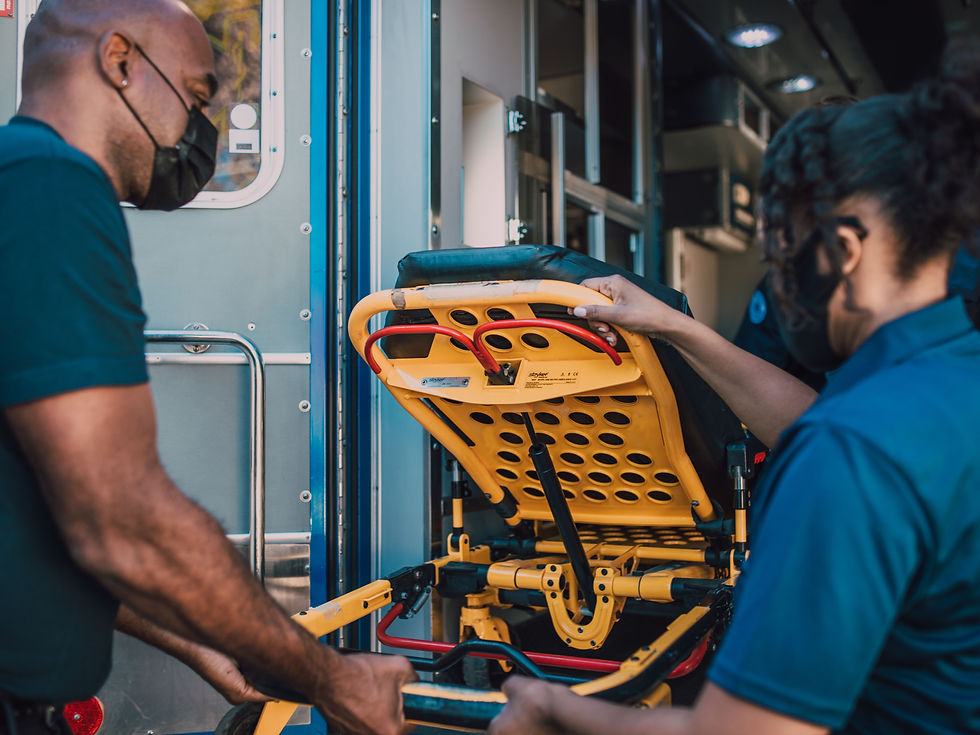
AI might support a consultation, but a patient may still be unable to afford medicine, obtain a test, return for follow-up, or reach a hospital when needed. Photo: RDNE Stock Project
The setting also matters. Penda Health is a private urban network with an established cloud-based record system and quality-improvement processes. The researchers cautioned that the findings may not transfer directly to rural clinics or less digitised public facilities, where patient needs may differ and issues like specialist clinician shortages and equipment shortages persist.
Dr Ikpeme Neto, founder and chief executive of the Nigerian health-technology company Wellahealth, says these surrounding constraints determine what clinicians can realistically do. “[In] Nigeria, even just doing a simple CT scan, you’ve got to be calculating and wondering and hoping,” he says.
His company combines digital services with community pharmacies, point-of-care testing, and telemedicine support. Neto argues that hybrid systems are more realistic than digital-only care because patients still need trusted providers, tests, medicines, and referrals.
Data before algorithms
The setting up of Tanzania’s electronic immunisation registry is a case study in why these foundations matter. The system linked individual vaccination records with stock management, allowing a dose recorded for a child to be deducted automatically from the facility’s inventory.
A study involving 924 facilities found that average monthly vaccine stockouts fell from 7.1% before the system was introduced to 2.1% afterwards. It could not prove that the digital system alone caused the decline, but it suggested that more timely information could help facilities manage supplies. Other research found that health workers spent less time registering and vaccinating each child.
“[Health workers] have to generate data as a result of the work they do. They should not just be data collectors.”
But digitisation was not an uncomplicated success. Registry use declined over time in many facilities. Uptake was stronger where more workers had received training and clinics had stopped maintaining electronic and paper systems simultaneously. Connectivity, electricity, staffing, and supervision all affected continued use.
Mwanyika says the lesson was not simply to give health workers a device. The technology had to generate data through work they were already doing rather than turn clinicians into additional data clerks. “They have to generate data as a result of the work they do,” he explains. “They should not just be data collectors.”
Mwanyika describes change management as one of the programme’s most expensive components. Frontline workers, supervisors, government officials, and community representatives helped design and test the system, while Tanzanian companies were involved so it could be maintained after externally funded projects ended.
In this case, localisation meant local ownership of the workflow, technical capacity, and a government willing to continue investing.
Digital records for AI forecasts
Those digitally stored immunisation records later supplied data for a separate AI pilot. Technology company Macro-Eyes trained a machine-learning model using vaccine-use data from 710 Tanzanian health facilities. It forecast demand for individual facilities in two-week intervals.
In the two regions analysed, the model’s forecasts were substantially closer to actual vaccine use than the existing forecasting method. But accuracy was still uneven: at only around 45% of facilities did the estimate fall within the broad range of half to twice the number of vaccine doses actually used.

AI pilots in Tanzania forecasted the vaccine needs of local health facilities, but the accuracy was uneven. Photo: Arthur Uzoagba
Macro-Eyes later said it planned to integrate and scale its AI-driven predictive system, but subsequent documentation by PATH described the technology being a pilot rather than a fully integrated national service.
The distinction matters for service delivery. An AI-based model may predict that a clinic will run out of measles vaccine, but it cannot release a budget, repair a vehicle, reopen an inaccessible road, or make doses appear in a regional warehouse.
Monitoring disease risk
Some service-delivery bottlenecks begin before a patient reaches a clinic and authorities need to know where disease risk is rising so scarce staff and supplies can be moved.
Dr Judy Omumbo, head of partnerships and resource mobilisation at the Science for Africa Foundation in Kenya, says African health systems hold potentially useful information, including historical data that were never formally recorded. That can include information from health facilities alongside population and environmental data.
The challenge is bringing those sources together quickly enough to identify emerging risks and act on them. “There are great data issues—how to integrate those data will be really important,” she says.
Timothy Endy, chief scientific officer at the Coalition for Epidemic Preparedness Innovations, describes a related use for AI-supported surveillance: combining outbreak information to identify emerging hotspots and help authorities decide where to send workers, vaccines, and other resources. He believes that such systems could “shift human resources to a hotspot that wasn’t anticipated”.
But the value of the prediction still depends on whether trained staff, transport, supplies, and laboratories are available. Dr Wilmot James, senior adviser at Brown University’s Pandemic Center, similarly argues that earlier detection depends on the availability of clinics that can collect samples and laboratories capable of returning results quickly.
Assistance, not substitution
AI’s most useful contribution may therefore be relatively narrow: helping clinicians produce better notes, forecasting doses, identifying patients at risk of missing follow-up, or making specialist knowledge easier to retrieve.
“I think [AI] can assist, but human beings are always going to be needed. It won’t be a solution on its own.”
Bermuda is much better resourced than most African health systems, but it shares a challenge common to small or underserved settings: limited local specialist capacity. Dr Chris Fosker, chief executive officer and medical director of Bermuda Cancer and Health Centre, uses algorithmic radiotherapy tools and remote peer review to draw on cancer specialists in Boston while treatment remains local. His preferred principle is to “move the knowledge” rather than the patient.
Fosker says safe adoption of AI requires capable information-technology teams, cybersecurity, clinical oversight, and a clear benefit for patients. Sometimes that benefit may simply be efficiency. “You’re gaining more time to be human,” he says.
But he warns against presenting AI as the answer to workforce shortages. “I think it can assist, but human beings are always going to be needed,” he says. “It won’t be a solution on its own.”
From pilots to public services
Technical performance is not the only obstacle between an AI pilot and a functioning public service. Endy says collaboration contracts, confidentiality agreements governing data and technical information, intellectual-property negotiations, and technology licences can take longer than parts of scientific work. AI may accelerate analysis while deployment processes move at their previous speed.

For African health systems, the real test of AI is whether the technology works in real-world conditions and delivers results that can be sustained after a pilot. Photo: Iwaria Inc
Financing is another risk once political attention moves on. The World Health Organization’s (WHO) work on AI for health stresses that countries need governance, regulation, and implementation capacity alongside the technology. For health services, that also means funding training, connectivity, maintenance, data governance, and the people expected to act on AI recommendations.
For African health systems, the more useful question is not whether AI can overcome service-delivery challenges in the abstract. It is which bottleneck a tool addresses, whether local workers helped design it, whether it functions under real infrastructure conditions, and whether the health system can act on what it produces after the pilot ends.
An algorithm can help decide where attention is needed. The harder work remains ensuring that somebody, somewhere in the system, has the time, supplies, authority, and resources to respond.


